
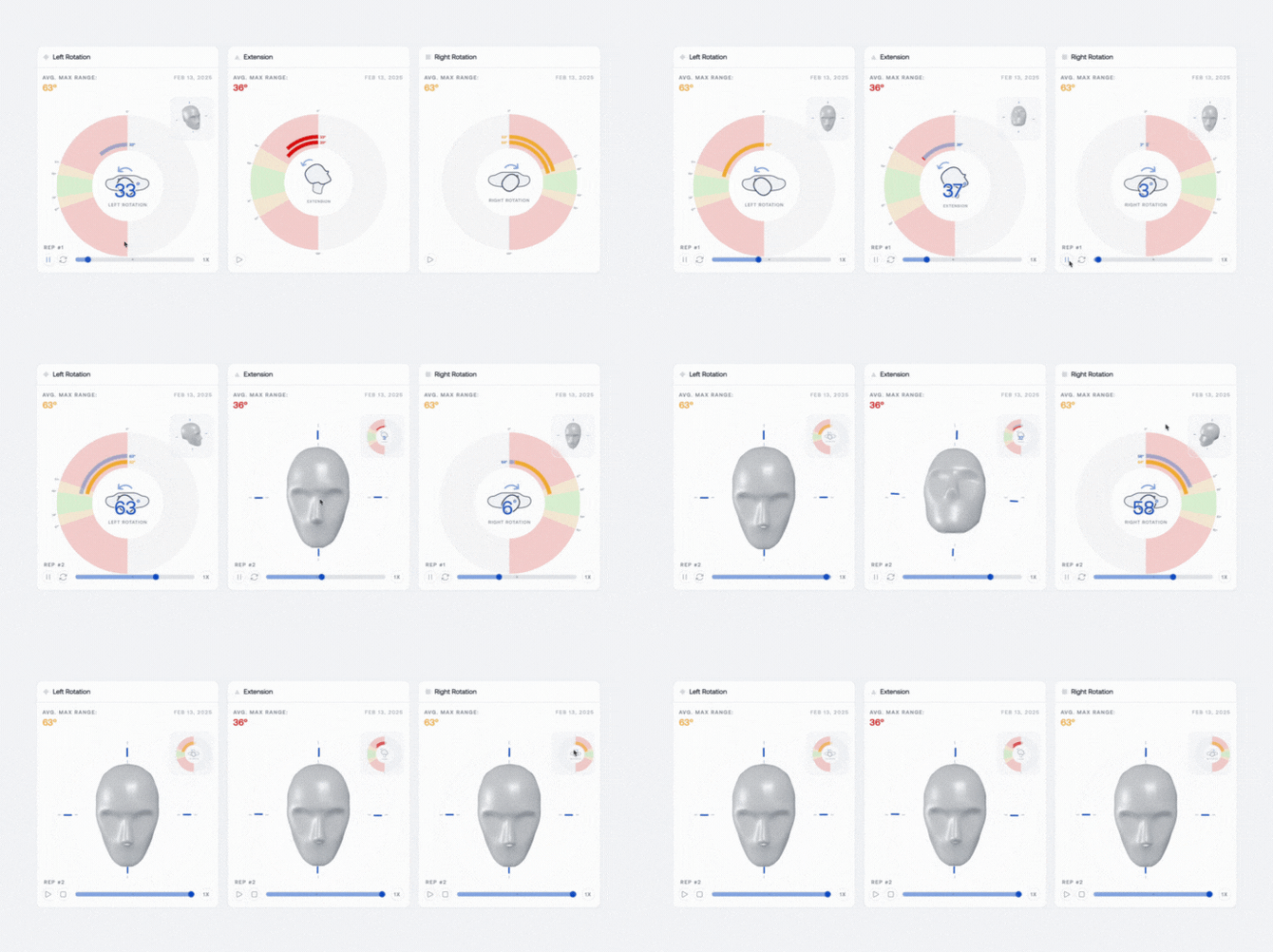
If the NeckCare assessment shows that your neck's range of motion is restricted, your clinician will interpret the results and discuss the next steps with you. Improving range of motion can help reduce stiffness, ease discomfort and make everyday tasks easier. Good range of motion is an important part of neck health.
If the assessment shows reduced sensory function in your neck, your treatment plan may include targeted exercises designed to train it. Research shows that adding these exercises to standard neck treatment can lead to greater improvements in neck pain and disability.
For patients experiencing persistent neck pain or lingering symptoms after injuries like whiplash or concussion, sensory function in the neck can be an important part of the picture. Research has clearly shown that combining standard neck therapy with specialized sensory exercises can help improve outcomes.
The NeckCare assessment can help show whether your neck may be involved in your symptoms after an injury such as whiplash or concussion. For example, suppose you are recovering from a concussion, still have symptoms, and your results on NeckCare's sensory tests fall below the reference values. That may suggest your neck is playing a part.
Repeating the assessment over time can help you and your care team track your progress. Athletes may also have a baseline assessment recorded, which gives a point of comparison if a neck injury happens later.